Using AI for Affiliate Content: Where It Helps, Where It Doesn't
Leave with: a clear split of what AI speeds up and what stays human, plus a quick audit for your next draft.
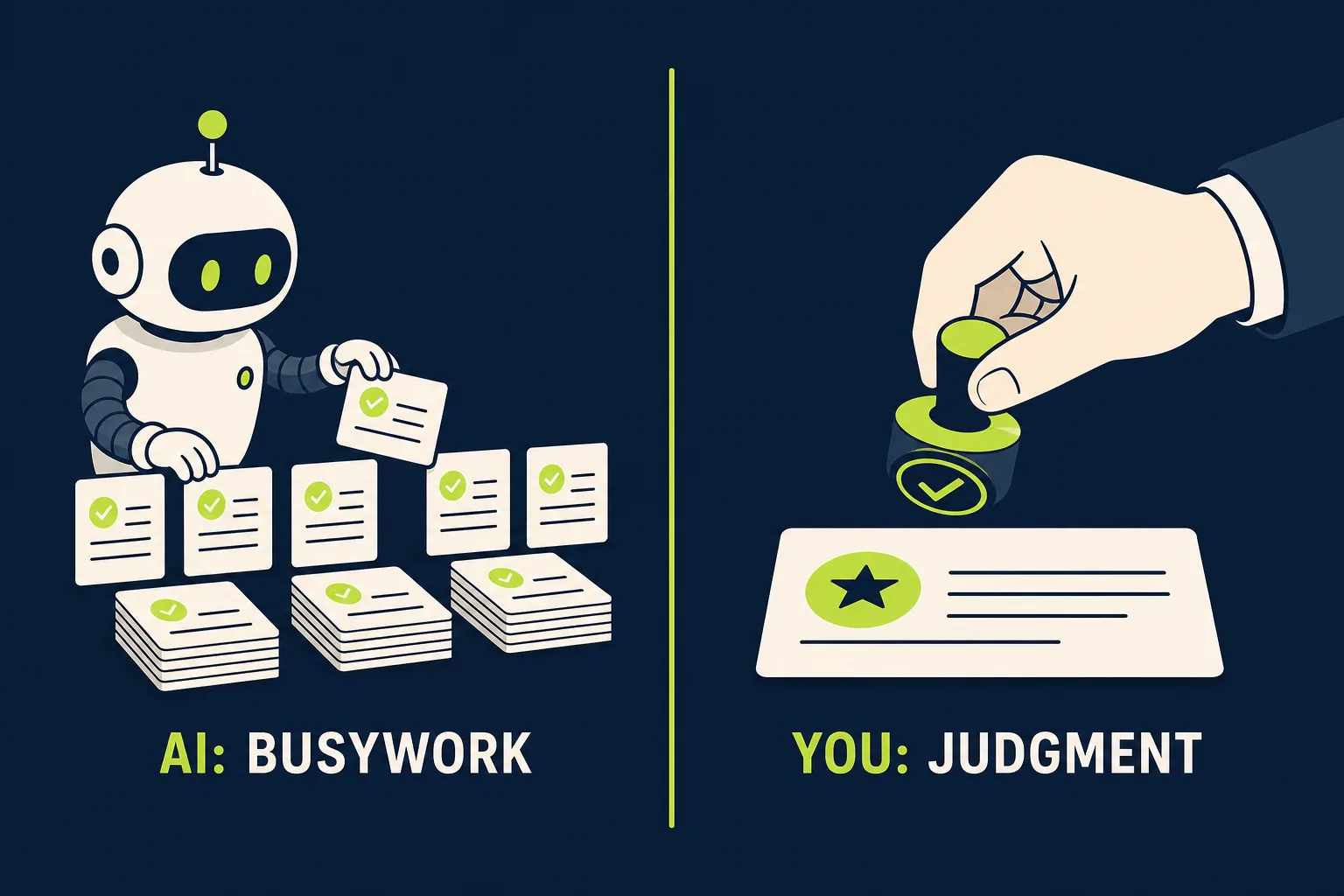
The honest answer to “should I use AI for my affiliate content?” is not yes or no — it is where. AI is genuinely good at the busywork of publishing, and it is genuinely bad at the judgment that makes a site trustworthy. This guide draws the line between the two, with a concrete helps/doesn't table you can use on your next draft.
The Central Question: Busy vs. Judgment
Every “AI will replace your job” and “AI will write everything for you” article is missing the real question. The useful question is not can AI write affiliate content — it obviously can, in the sense that it can produce plausible paragraphs. The useful question is: which parts of the work is AI actually good at, and which parts does it quietly damage if you hand them over?
Split the work in two. On one side is busywork: assembling research, producing first drafts, formatting, checking consistency. This is repetitive, pattern-based, and exactly what a fast tool should do. On the other side is judgment: the verdict a reader trusts, the experience you have lived, the choice of which niche to enter, and the call about what not to publish. This is the part that makes your site worth trusting, and it cannot be delegated without becoming a lie.
The honest framing: AI reduces busywork; human judgment stays central. That sentence is the whole article. The tool is a brilliant, fast, occasionally wrong assistant — not an author and not a truth machine.
Where AI Helps Reduce Busywork
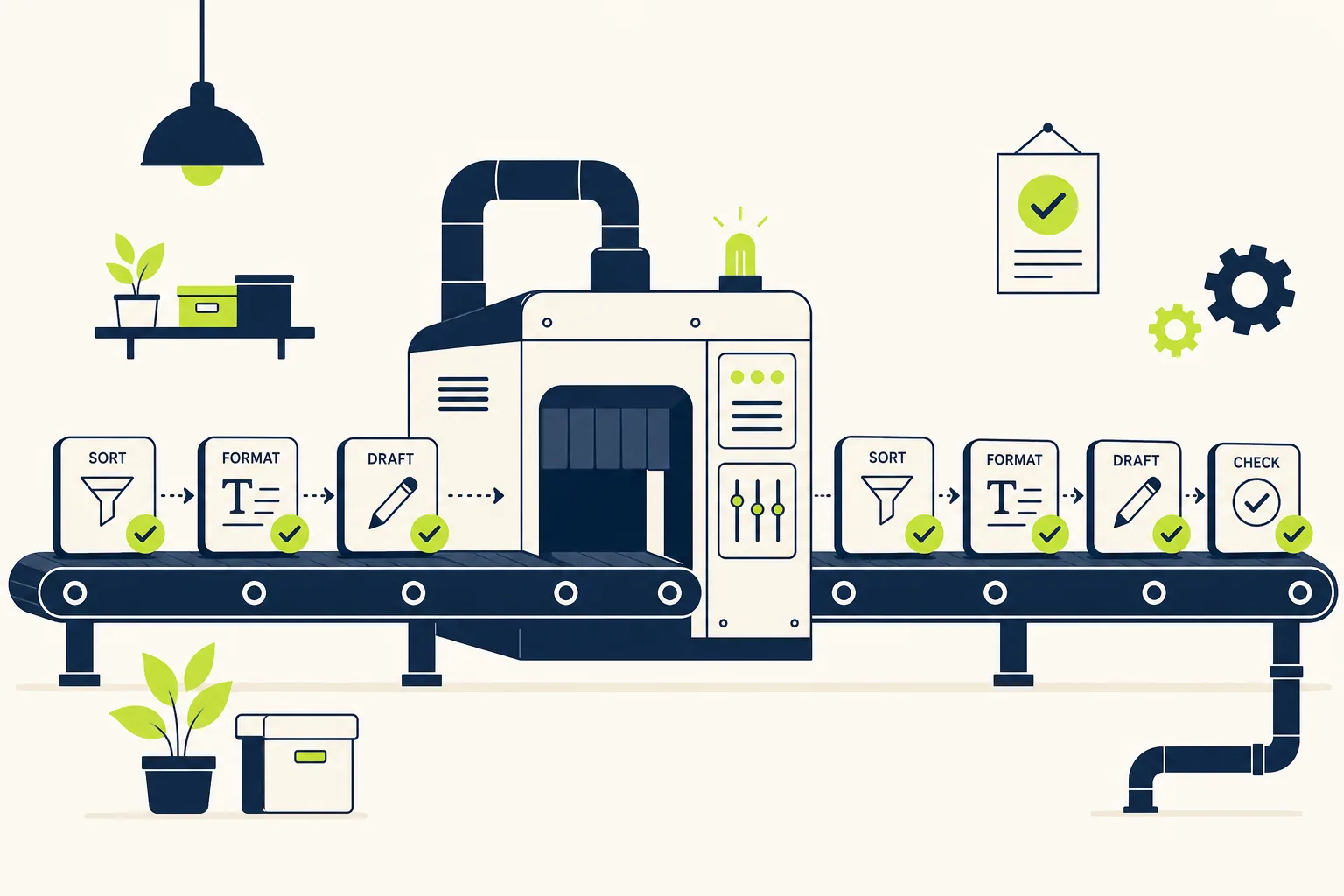
Four kinds of busywork are where AI earns its keep. Each is something that eats hours and adds no judgment.
Research assembly. When you already know the facts — you opened the product pages, you have the source material — an AI tool can assemble that material into a structured first pass faster than you can type it out. The key word is assembly: the AI arranges what you supplied; it does not decide what the page means. Our source-packet method is built entirely on this principle: you feed the tool only the facts you verified, and it builds from those.
First drafts. Given a clear outline, a direct reader question, and the verified facts, an AI can produce a rough draft that gets you 80% of the way in minutes. The draft is the raw material — not the final word. Treat it like an intern's first pass: useful structure, requires your edit before it ships.
Formatting and structure. Headings, consistent formatting, a table of contents, short paragraphs — these are mechanical, and AI handles them without complaint. The same page reorganizing your notes into clean sections is a real time-saver.
Consistency checks. Spelling, repeated facts, a tone that drifts from your chosen style — these are the checks a careful editor does with a checklist, and a tool does instantly.
Each of these has the same shape: the AI is improving on material you already control. When you paste a real outline and real facts, the output is bounded. When you ask the AI to “write an article about X,” you have handed it a blank page and it will fill it with plausible-sounding guesses. The busywork split only works when you are at the assembly step, not the invention step.
Where Human Judgment Must Stay
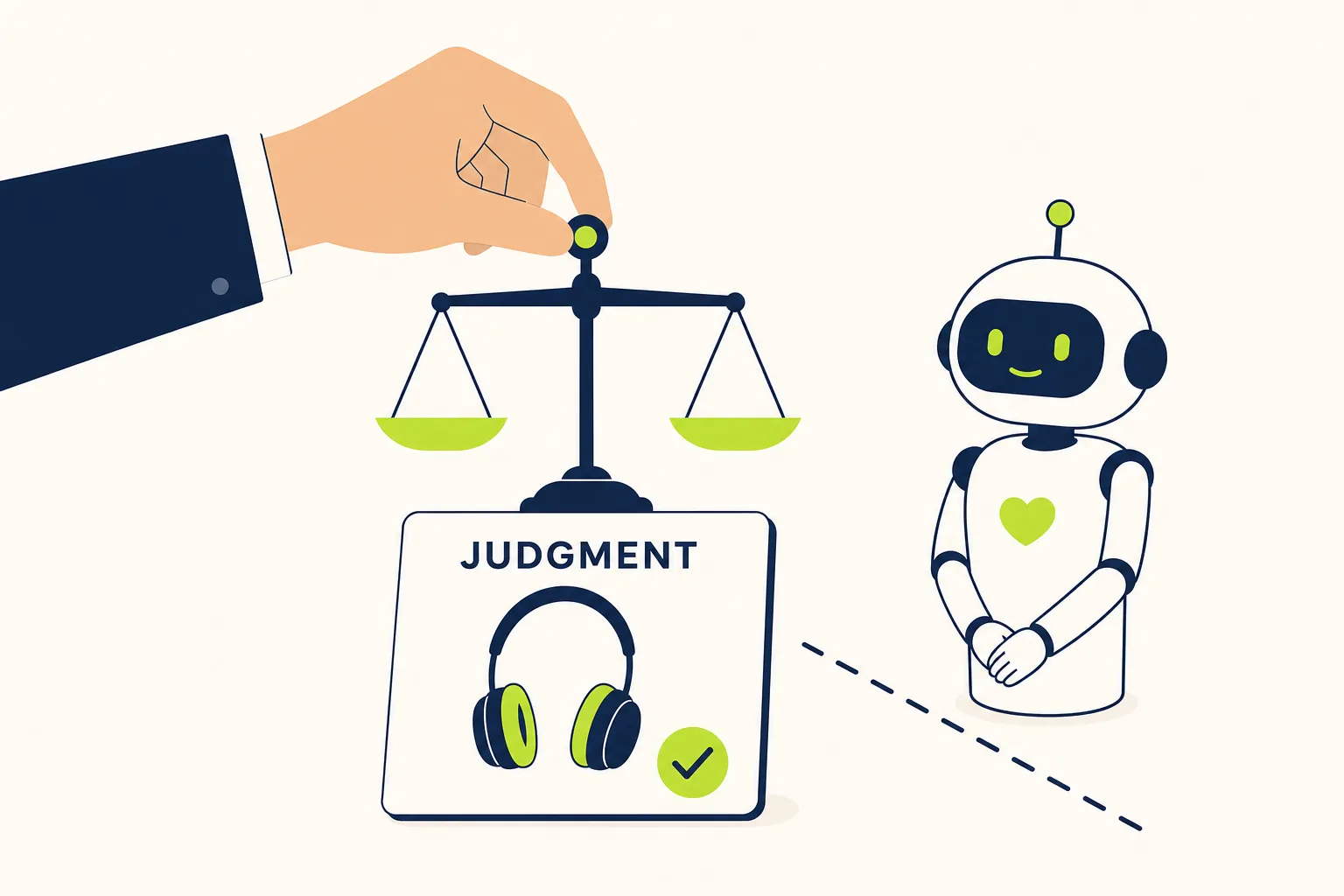
Now the other side of the line. There are four things an AI assistant cannot do for you, no matter how good its prose is.
The verdict. A review that says “for the renter in a small apartment, the clamp-mount feeder is the honest pick” is a judgment based on experience, priorities, and a specific reader. An AI can describe both options fairly; it cannot tell your reader which one you would put your name behind. That verdict is yours.
Experience claims. The sentence “I tested this grinder for six months on a third-floor balcony and it survived the wind” is only true if you did it. If the AI writes it, it is a fabrication — the worst kind, because it sounds like lived experience. Never let AI claim experience you have not had. State your tested vs. not-tested limits plainly instead.
Niche choice. Choosing a niche — the carve-down from “home coffee gear” to “café-quality coffee for apartment renters with limited counter space” — is a judgment about who you are willing to serve for a year. A tool can score categories, but the decision to commit is yours. This is exactly what the 7-criterion niche scorecard is for: it gives you evidence, not a decision.
What not to publish. The single most underrated human job is deletion. The judgment that a sentence, a claim, or an entire page is not ready — because the number is unverified, the experience is invented, or the niche judgment is dishonest — is the decision that keeps your site honest. No tool can make that call for you, because it requires a standard you hold.
These four are not “AI limitations to work around.” They are the product. The reader who trusts your site trusts the verdicts, the lived experience, and the editorial judgment. If you hand those to a tool, you have handed the tool your site's reputation.
The Helps / Doesn't Table
A practical reference for the next page you publish:
| Task | AI helps? | Why | What stays human |
|---|---|---|---|
| Research assembly | Yes | Pulls verified facts into an outline faster than typing | You collected the facts; you approve the outline |
| First drafts | Yes | A rough cut you edit beats a blank page | You verify every claim before it ships |
| Formatting & consistency | Yes | Headings, TOC, tidy paragraphs, consistent tone | You decide structure and voice |
| Editing & tightening | Yes | Cuts fluff; catches typos and drift | You do the final editorial read |
| The verdict / recommendation | No | A tool cannot put its name behind a pick | You decide what you stand behind |
| Experience claims | No | AI cannot know what you have lived | Only you can write “I tested this” |
| Niche selection | No | A category is a commitment, not a data point | You choose who you serve |
| What gets published | No | Deletion is a judgment call | You are the publish gate |
| Fact-checking / compliance | No | Accuracy and disclosure rules are not stylistic | You verify sources and place disclosures |
Read the table top to bottom and the pattern is obvious: AI owns the mechanical work; humans own the decisions.
A Structured Workflow That Keeps the Line Separate
The split only survives if you build it into your process. The workflow the kit uses — and that you can use on any site — is: research → outline → draft → edit → fact-check → publish. AI is allowed into the middle steps; it is never the last word.
- Research. You gather the real sources: product pages, program terms, official specs — with the date you checked them.
- Outline. You (or the AI, from your research) turn the question into a structure.
- Draft. AI produces a rough cut from the verified material you supplied.
- Edit. You read it as a human with a standard, not as a fan of the draft.
- Fact-check. The publish gate: every claim traces to a source you can open, or it gets cut. Our source-packet method runs this as four named moves, including a 120-word direct-answer test.
- Publish. You click it.
The two non-negotiable stops are 5 and 6. No “auto-publish” shortcut exists — if a tool tells you it will publish on its own, that is a red flag, not a feature. The human runs the fact-check and clicks publish, because those are the two places where AI hands you a site you cannot defend.
The Trust Signal: Readers Can See You
The quieter reason the split matters: readers and search engines are both built to detect the difference. The pages that readers trust — and that ranking systems keep surfacing — are the ones with evidence of actual experience: specific verdicts, honest limits, verified numbers. A page of smooth plausible prose with no lived judgment reads as generic, and generic pages do not earn trust or clicks. Trust is the mechanism of the business: the reader who trusts your page is the reader who returns, and the reader who returns is the reader who eventually acts on your links. Judgement is the ingredient that builds that trust, and the one thing you cannot outsource.
The Next Step
Your next step is a five-minute audit of your last draft — the one with AI-generated help. Open it and find the first factual claim or the first recommendation. Ask two questions: Where did this number come from? and Would I put my name behind this verdict with my own experience? If the answer to either is “no,” the sentence stays off the page until it is fixed. That single pass is the whole honest split in action: the AI saved you time, and you decided what ships.
Want the exact structure that turns AI into a research assistant instead of a fog machine? The Affiliate Agent Kit builds the source-packet workflow, the verification pass, and the trust pages into every template — so the honest split is structural, not a daily choice. The Learn hub has more, including our deep dive on why AI can't be your truth machine and the niche scorecard you should run before you write a single AI-assisted word.
Results vary. Affiliate marketing involves effort, learning, traffic acquisition, and compliance. Earnings are never guaranteed.
Results vary. Affiliate marketing involves effort, learning, traffic acquisition, and compliance. Earnings are never guaranteed.