The Source Packet Method: How to Keep AI from Lying on Your Affiliate Site
Leave with: a seven-point packet and a four-move verification pass that keep AI drafts honest.
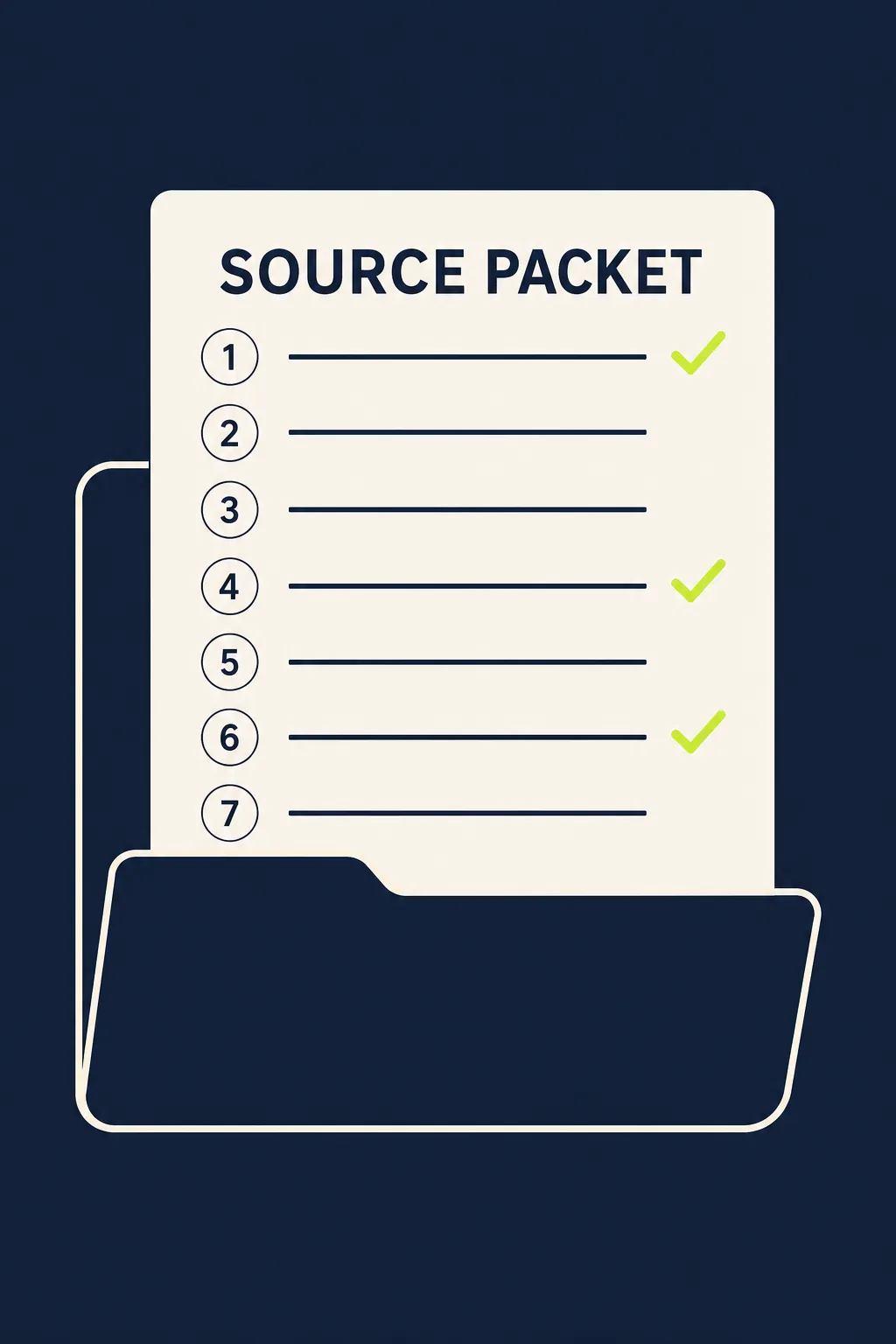
Most people use AI like a fog machine: a vague prompt goes in, a cloud of confident-sounding text comes out, and someone has to guess which parts are true. The source packet method turns AI into a research assistant instead — by feeding it only what you actually know, and forbidding it to invent the rest. It is the single change that separates a draft you can publish in an afternoon from one you have to rewrite from scratch.
The Fog Machine Problem
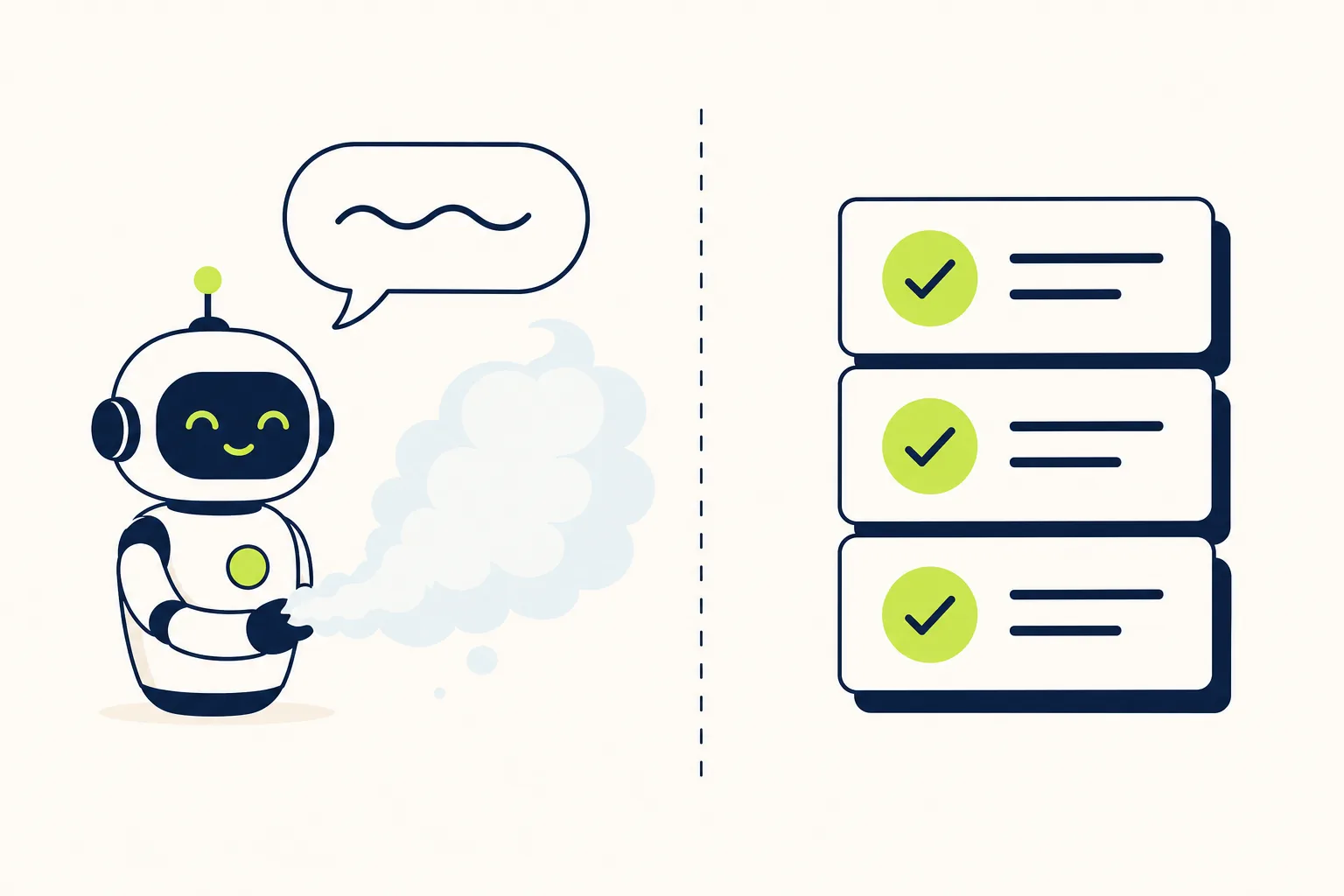
Ask a general AI chat to "write me an affiliate page about bird feeders" and it will happily produce a page full of specific-sounding claims — dimensions, prices, ratings — none of which it checked and some of which it invented. That is not malice; it is how the tools work. A language model produces the most plausible text, not the most true text. When you cannot tell which is which, the AI is a fog machine: mist that looks like substance.
The source packet method is the fix. Before you ask your agent to write a single sentence, you fill out a seven-point packet for the page. The packet is not a creative brief. It is a guardrail: everything you did not put on it, the agent is forbidden from inventing — and the prompt tells it so. It turns "make me a page" into "use only what I gave you, cite each fact, and flag what still needs verification."
A source packet is a short block of text — a dozen lines pasted into your prompt — recording the only facts your AI is allowed to use for this page. It is also reusable: the second page on the same niche costs less than the first, because the viewpoint, the limits, and the "will-not" line carry over.
The Seven Points
Each part exists for a reason. Skip one and the agent will quietly invent the missing piece.
1. Reader question
The exact question this page answers, in the reader's words, not yours. Not "benefits of tube feeders," but "I have a narrow balcony rail — what kind of bird feeder actually fits without wobbling or dropping seed on the neighbor below?" A specific question forces a specific page; a vague one produces a vague draft. If you cannot write the reader's question in one sentence in their voice, you are ready to write five more questions and pick the sharpest.
2. Your viewpoint
One sentence naming who you write for and what makes your angle worth their time. "I write for apartment renters who want a clean, low-mess feeder that survives wind and a nosy building manager." This is the spine of the page: when the draft drifts into general advice for backyard birders, the viewpoint tells you it has lost its reader. It is also permission to have a take — not "here are five options, you decide," but "for the narrow-rail reader, here is what I would do and why." A page without a viewpoint reads like a listicle; a page with one reads like advice from a person who has thought about it.
3. Official sources — with URL and date checked
Two or three facts you actually consulted, with the URL and the date. The line is: "Maker page for Brand X tube feeder, 20cm × 8cm × 8cm, 340g. URL: [URL]. Date checked: 2026-09-14." If you have not opened the page, the source does not go on the packet — citing a page you did not read is a lie in the citation itself, and the agent will quote it as if it had been read. In agentic mode the agent opens the URL; in chat mode you paste two or three facts yourself, or the claim becomes a labeled unknown marked [VERIFY].
Rule of thumb: if a sentence in the draft cannot be traced back to a line on the packet, it either comes out or gets re-sourced. The packet is the audit trail.
4. Product details you can verify
Name, model, stated dimensions, stated weight, stated materials, price if known. "Brand X tube feeder, model TX-12, 20cm × 8cm × 8cm, 340g, ~$24 USD at the time of writing." The verb is stated — the packet records what the maker's page says, not what you measured. Separating "stated" from "tested" is how a reader knows how much weight to put on each number, and how you avoid presenting a spec sheet as a hands-on review.
5. Limits — what you have not tested
The line most beginners want to skip, and the line that makes the page honest. "I have not tested this feeder. I have tested the brand's smaller model for six months on a third-floor balcony, but I have not handled this exact unit." The limit tells the reader what the page is and is not — and a page that announces its limit is one a reader can trust, because the limit is the floor under every claim that follows. The agent's job is to repeat it where the reader is most likely to act, not buried in a footer.
6. Desired outcome
The decision you want the reader to make, and the one next step you want them to take. "Decision: a clamp-mount feeder for a rail under 12cm wide; a hang-mount is the wrong pick. Next step: measure your rail width before you order." This keeps the page from becoming a museum of facts. The draft must end on that next step.
7. What you will not do
The negative. "I will not claim testing I have not done. I will not invent a quote. I will not borrow a five-star rating. I will not publish a price I have not seen on the official page in the last 30 days." Writing it down gives you a concrete sentence to hold the draft against. When the agent offers a too-convenient paragraph, you do not argue — you point at point 7 and delete the sentence. Re-read point 7 before you publish; if you find yourself bending it because the page is "almost done," you are exactly the reader it was written for.
A Worked Example
Here is the packet, filled in for the page "How to Choose a Feeder That Fits a Small Balcony":
1. Reader question: "I have a narrow balcony rail — what kind of bird feeder actually fits without wobbling or dropping seed on the neighbor below?"

2. My viewpoint: I write for apartment renters who want a clean, low-mess feeder that survives wind and a nosy building manager.

3. Official sources (each with URL and date checked 2026-09-14):
   - Maker page, Brand X TX-12 tube feeder: 20cm × 8cm × 8cm, 340g, dishwasher-safe top.
   - Maker page, Brand Y CM-4 clamp-mount feeder: clamp range 2–9cm rail width, 410g, weatherproof steel.

4. Product details I can verify: Brand X TX-12, $24; Brand Y CM-4, $32, at the makers' sites today.

5. Limits: I have tested Brand X's smaller model (TX-8) for six months on a third-floor balcony. I have not tested TX-12 or CM-4 hands-on.

6. Desired outcome: Decision — clamp-mount for rails under 12cm; hang-mount is wrong for narrow rails. Next step — measure your rail width before ordering.

7. What I will not do: no claimed testing I have not done; no invented quotes; no borrowed ratings; no price not seen on the official page in the last 30 days.
Then the prompt:
Write a first draft using only this source packet: [paste packet]. Audience: apartment renter with a narrow balcony rail. Goal: pick the right feeder style and measure before ordering.
Rules: separate verified facts from opinion; cite each factual claim with the supplied source; state what I have not tested; do not invent experiences, quotes, prices, or outcomes; write short paragraphs; include a direct answer in the first 120 words; end with the practical next step from point 6.
After the draft, list every claim that still needs verification.
The draft opens with the direct answer in the first paragraph ("if your rail is under 12cm wide, a clamp-mount feeder is the only honest pick"), uses only the prices and dimensions from point 4, repeats the tested/not-tested distinction in the body, ends on the measuring step — and ends with a numbered list of every claim that still needs a source. That verification list is the real deliverable; the draft is the rough cut, and the verification list is the publish gate.
The Verification Pass: The Publish Gate
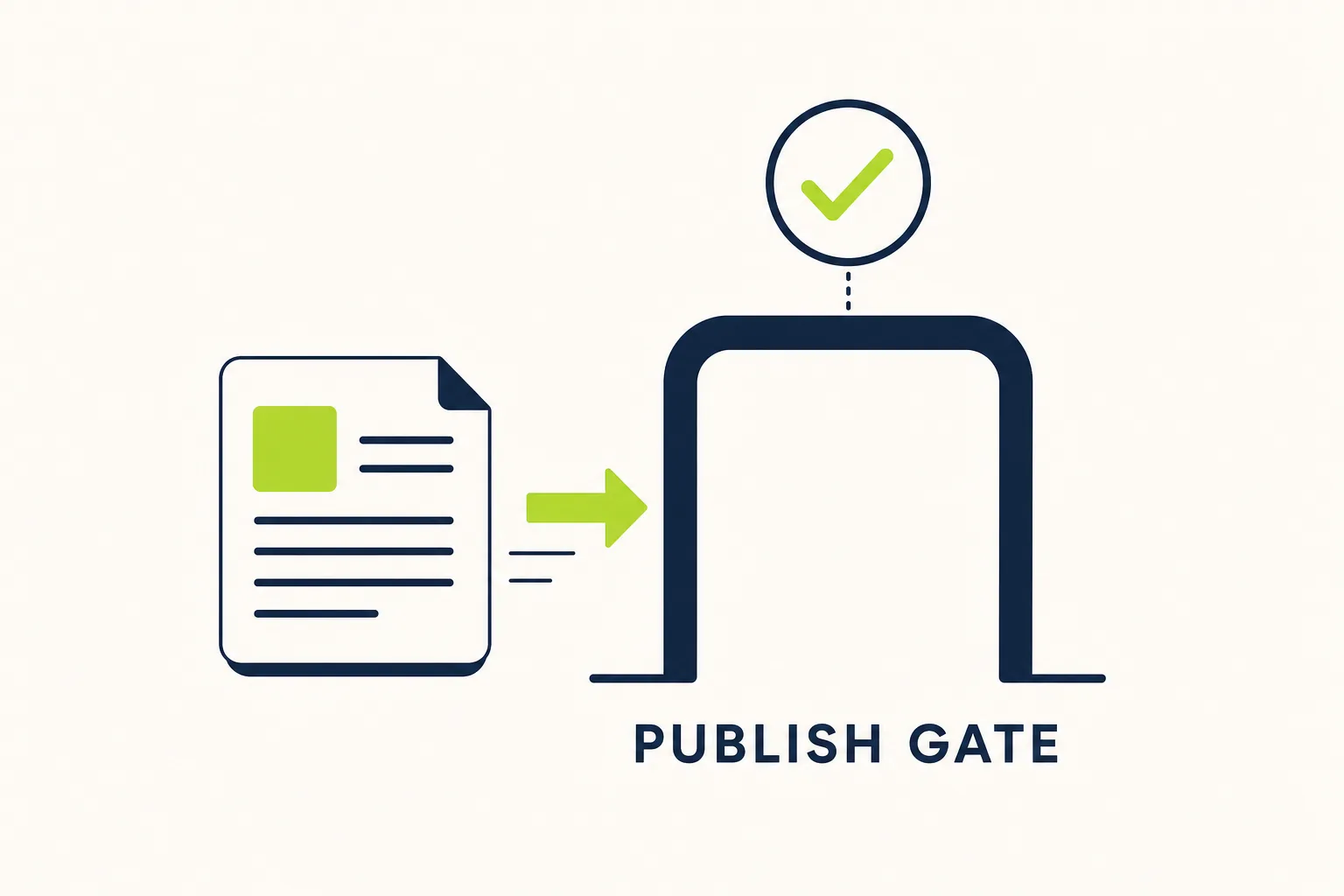
The pass is a separate task from writing — run it after a break, so you are reading the draft instead of admiring it. Four moves, in order:
Move 1 — The source-trace. For every factual claim — a dimension, a price, a feature — ask: where is this in the packet? If it is in the packet, it passes. If not, it comes out or goes back to the source. The agent's verification list is the table of contents for this move.
Move 2 — The limit-check. Read for any sentence implying hands-on testing you have not done. "I tested this for a month and the seal held" is fine if you tested it; "This seal will survive a coastal winter" is not, unless you tested it in one. Soften any sentence too strong for point 5, or add the limit right next to the claim.
Move 3 — The disclosure pass. If the page contains an affiliate recommendation, the disclosure sits immediately before or beside the first one — not in a footer, not in a dropdown. If it is in the right place with the right wording, you pass. (See our disclosure placement guide for details.)
Move 4 — The 120-word test. Read only the first 120 words. If a reader could act on that paragraph alone, the page is doing its job. If the answer hides in paragraph six, restructure — put the short answer at the top and let detail follow. Direct-answer-first is the cheapest way to make an AI-assisted page feel human, because a human with a limit says the answer first and defends it second.
When all four moves pass, the page is ready to publish. When any fails, name the failure, fix or delete the line, and run the pass again on that line only.
Agent vs. Human Judgment
The method works in both shapes an AI tool takes, and the packet is the same in both. In chat mode (your tool cannot browse or write files), you open the official pages yourself, paste the facts into the packet, and copy the draft into your page file. In agentic mode (your tool can browse and write files), the agent opens the URLs, fetches the facts, and writes the draft into a file — but the packet is still the contract, and the verification pass is still yours.
Beginners sometimes think "agentic mode means the agent is in charge." It does not — agentic mode means the agent can hold the keyboard. Mode changes the typing, not the responsibility line. The agent never publishes, never edits a live page, never accepts a program's terms, never enters payment details. You approve the packet, run the verification pass, and click publish.
This is what it looks like when "don't let AI make stuff up" stops being a sermon and starts being a system. Each rule has a packet line that backs it up; each packet line has a verification move that enforces it. The agent does the rough cut and saves you hours of looking up dimensions. You do the verification pass and keep the page honest — and honest pages are the ones readers trust.
The Next Step
Your next step is to build the habit: before your next page, fill out a seven-point packet. It takes five minutes, and it is the cheapest pre-flight check you have.
If you want the packet structure, the prompt, and the verification checklist ready to paste, the Affiliate Agent Kit includes them as part of its content workflow — the kit drafts from source packets and produces the verification list automatically. Prefer to keep reading? The Learn hub and free tools have more, including our guide to buying your first domain, the step before you have anything to write about.
One honest CTA: write one packet before your next page — even if the page is small. See what it does to the draft's confidence. The method is free; the habit is the product.
Results vary. Affiliate marketing involves effort, learning, traffic acquisition, and compliance. Earnings are never guaranteed.
Results vary. Affiliate marketing involves effort, learning, traffic acquisition, and compliance. Earnings are never guaranteed.