Your AI Agent Is a Research Assistant, Not a Truth Machine
Leave with: the habit of treating AI as a research assistant, not an authority, and a verify-before-publish rule.
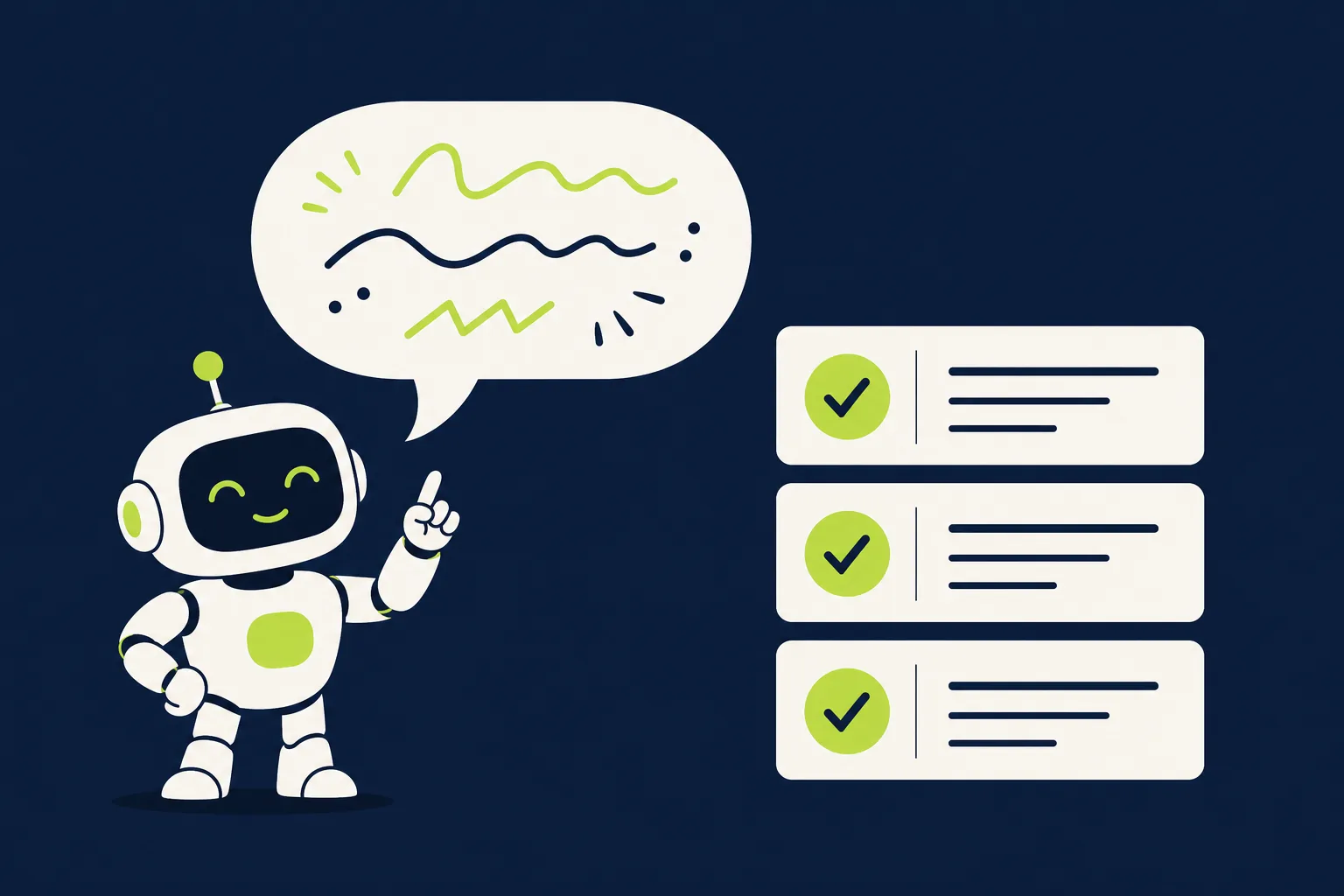
Your AI agent will confidently tell you something false, and it will sound completely sure while doing it. That is not a bug you can pray away; it is how the tool works. The question is not “can I trust AI?” — it is “what system do I put around it so its output is trustworthy?” Here is the answer, and it starts with a habit, not a hope.
Why AI Confidently Makes Things Up
An AI language model is not a database and it is not a search engine. It is a system trained to produce the most plausible next sequence of words given the context you gave it. Plausible and true are different things. When the model does not actually know a fact — a price, a specification, a program's rule, a date — it does not say “I don't know.” It generates the most plausible-sounding answer anyway, and it says it with the same confident tone it uses for facts it knows cold.
That is why the failure mode is so dangerous: the lie does not sound like a lie. It sounds like an expert. If an AI says “Amazon's cookie lasts 24 hours” [VERIFY — this is an example of the kind of claim that must be checked, not a fact], it sounds as certain as if it had quoted the terms page. The confidence is the problem. A tool that quietly said “I'm not sure” would be safe; the tool you actually have sounds sure about everything, including the things it invented. The honest framing is that your agent is a brilliant, fast, occasionally wrong intern — not an authority. An intern is useful because everything they produce gets checked before it leaves the building. The moment you stop checking, you stop having an intern and start having a liability.
Confidence Is Not Evidence — It's a Font Choice

Hold onto one sentence, because it will save you: confidence is not evidence; it is a font choice. A sentence can be written with total conviction and still be wrong. The confidence tells you nothing about the truth of the claim; it only tells you about the tone of the writer — and for an AI, the tone is always confident, regardless of whether it is right.
The practical version: when the agent hands you a sentence with a specific claim and no source, strip it to what you can honestly say from your own experience, or mark it “unverified” until you check. A confident sentence about an unverified number is exactly the kind of content that gets a beginner in trouble — and it is the kind of content that search systems are built to demote, because they are looking for helpful, reliable information, not confident guessing. The rule is simple: if the answer to “where did that number come from?” is “the agent said so,” the sentence stays off the page until it has a real source attached.
The Source-Packet Discipline: The Antidote
You cannot stop an AI from being plausible, but you can stop its plausibility from reaching your readers. The antidote is the source-packet method — feed the agent only the facts you have actually verified, and make it build from those, rather than from whatever it half-remembers.
A source packet is a structured set of facts you supply before the agent writes: the real program terms you read, the actual prices you checked, the spec details you confirmed, the quotes you copied from a page you can open. You hand the agent the truth you already gathered, and you instruct it to write using only those facts. When the agent's draft makes a claim, you can trace it back to a line in the packet — or you can see that it is not in the packet, which means the agent invented it and it gets cut.
The rule to write at the top of every project note is a single line: “the agent writes; I verify; I am the one who hits publish.” That line is the difference between using a tool and being used by it. Give the agent a named role — research assistant, not author — and the discipline becomes concrete: a research assistant is allowed to be fast and occasionally wrong, because everything they produce gets checked. An author is accountable for every word. Keep the agent in the assistant seat, and the work stays yours. (The full seven-point packet structure, with a verification pass built in, is the source-packet method.)
Verification as a Habit, Not a Chore
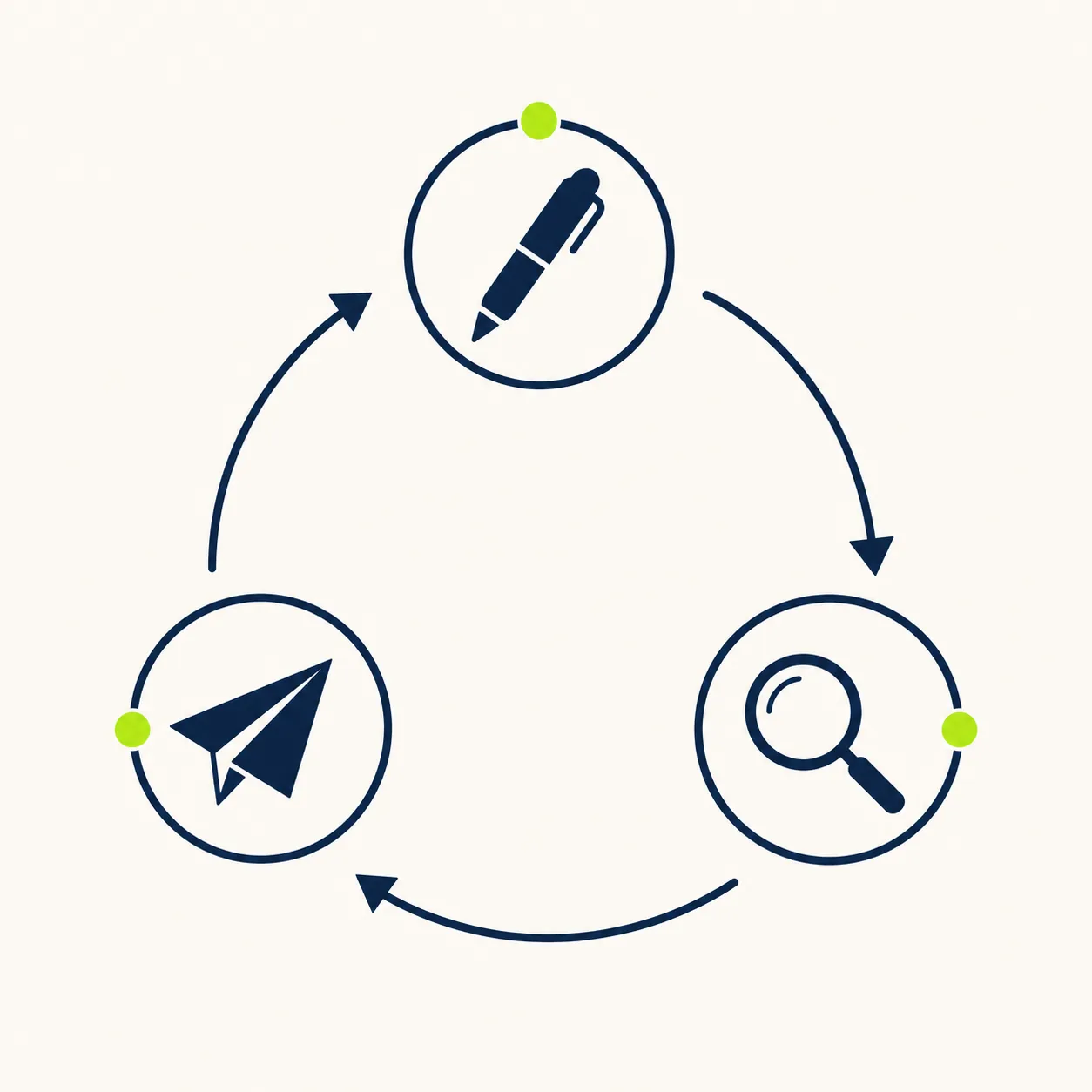
Verification sounds like a tax on speed, but the honest framing is the opposite: it is the cheapest insurance a site whose only asset is its reputation can buy. The trick is to make it a habit so small it survives a tired Tuesday, rather than a big review you keep putting off.
Start with a “verify before publish” rule written at the top of your project note. It covers at minimum: prices, laws, specifications, program terms, health, safety, and current events. Every claim in those categories needs an inspectable source — a page you can open, a document you can cite, a quote you can copy. Then keep a short “claims I made from memory” list at the end of every draft, so you can audit yourself before publishing instead of trusting your memory of what you checked.
Two aids make the habit concrete. First, the three-source minimum for any claim that affects a reader's money, health, or safety: at least two independent sources that agree, plus one official source (a program's own terms page, a government page, a spec sheet) that confirms the detail. If you cannot meet the bar, the claim is unverified and the page should say so. Second, the weekly evidence check: before you publish anything on Friday, spend ten minutes re-reading your “claims I made from memory” list and asking which ones you can now verify. Some became checkable as you researched other pages, and the list shrinks almost on its own. The list is not a confession; it is a queue, and each week you move a couple of items from “unverified” to “source-backed.”
The deeper reason the habit matters is that a one-person shop can produce work that reads like a team precisely because of this discipline. The agent drafts; you audit. “Audit” means asking “where did this number come from?”, “what page says that?”, and “what is the date?” If a sentence cannot survive a reader skimming on a phone with its source intact, the sentence is not ready.
The Trust-First Angle: Why Honesty Compounds
Here is the part that flips verification from a cost into an advantage. Most marketers hype, so the skeptical reader tunes them out — and so do the platforms. When you quietly do the unglamorous work of verifying claims, the reader can hear the difference, and so can the ranking systems, which are designed to prioritize helpful, reliable information over content created to manipulate results. The careful, verified page is not just the ethical choice; it is the durable one. When the hype gets purged, the careful pages are the ones still standing.
This is the trust-first angle, and it is why the whole discipline matters more than any single fact you verify: a site whose only asset is its reputation cannot afford a single confident lie. Every unverified claim you let through is a crack in the one thing you are actually building. Every source-backed claim is a brick. The reader who trusts your page is the reader who comes back, and the reader who comes back is the reader who eventually acts on your links. Honesty is not a limitation on growth; it is the mechanism of it. The disclosure that costs you a little confidence in the short term is the same move that keeps a one-person site alive when a sharper reader checks it. (Placing that disclosure where it can be seen is its own skill — see our guide to disclosure placement.)
What Stays Human, No Matter What
No amount of source packets will make the agent into you — and it should not try. There are parts of the work that are yours alone, and they are the parts that make a small site feel human:
- Lived experience. The agent cannot tell a reader what it actually felt like to use a product, what surprised you, or what you wish you had known before you started. Those sentences are yours alone — and they are the ones the people-first guidance rewards most, because they are the evidence of experience that no amount of plausible text can fake.
- Compliance judgment. The agent can draft a disclosure, but a disclosure is a human accountability statement. It should sound like you on a good day, not like a paragraph assembled from a template. You decide what counts as a real recommendation from your own experience, and you sign your name.
- The final voice check. The agent can catch typos and missing sources, but it cannot feel whether a sentence actually helps a real person. The final read — the one where you ask “is this genuinely useful, or is it just plausible?” — has to be human, and it has to be you.
When you feel like the agent has made you unnecessary, remember the opposite is true: the agent handles the mechanics, and you supply the voice, the judgment, and the honesty. That combination is the whole business. The agent reduces busywork and creates better systems; it does not replace fact-checking, product experience, compliance judgment, or editorial review. AI assists; humans decide.
The Next Step
Your next step is the smallest habit that starts the whole discipline: write the “verify before publish” rule at the top of your next project note, in your own words. One line — something like “the agent writes; I verify; I am the one who hits publish” — plus the categories you will always check: prices, laws, specs, program terms, health, safety, current events. A rule you can recite from memory is a rule you will use; a rule buried in a template is a rule you will skip on a Tuesday. Do that today, and you have started the habit that keeps the agent honest.
Want the full packet structure and the verification pass that turns a fog machine into a research assistant? The source-packet method is the deep dive, and the Affiliate Agent Kit builds the source-packet workflow and the trust pages into its templates so the discipline is structural, not optional. The Learn hub has more on keeping AI honest — including what an affiliate marketer actually does all day, where the same verify-before-publish habit shows up in the weekly rhythm.
One honest CTA: write the rule today, and run the claim-audit on one sentence of your last draft. Ask where the number came from. If the answer is “the agent said so,” the sentence does not ship until it has a source. That one move is the whole method in miniature — and it is the difference between a site that compounds and a site that gets quietly corrected.
Results vary. Affiliate marketing involves effort, learning, traffic acquisition, and compliance. Earnings are never guaranteed.
Results vary. Affiliate marketing involves effort, learning, traffic acquisition, and compliance. Earnings are never guaranteed.