How Affiliate Marketing Works: The Publisher–Merchant–Reader Triangle
Leave with: a plain-language picture of the publisher-merchant-reader triangle and a three-sentence contract for your first link.
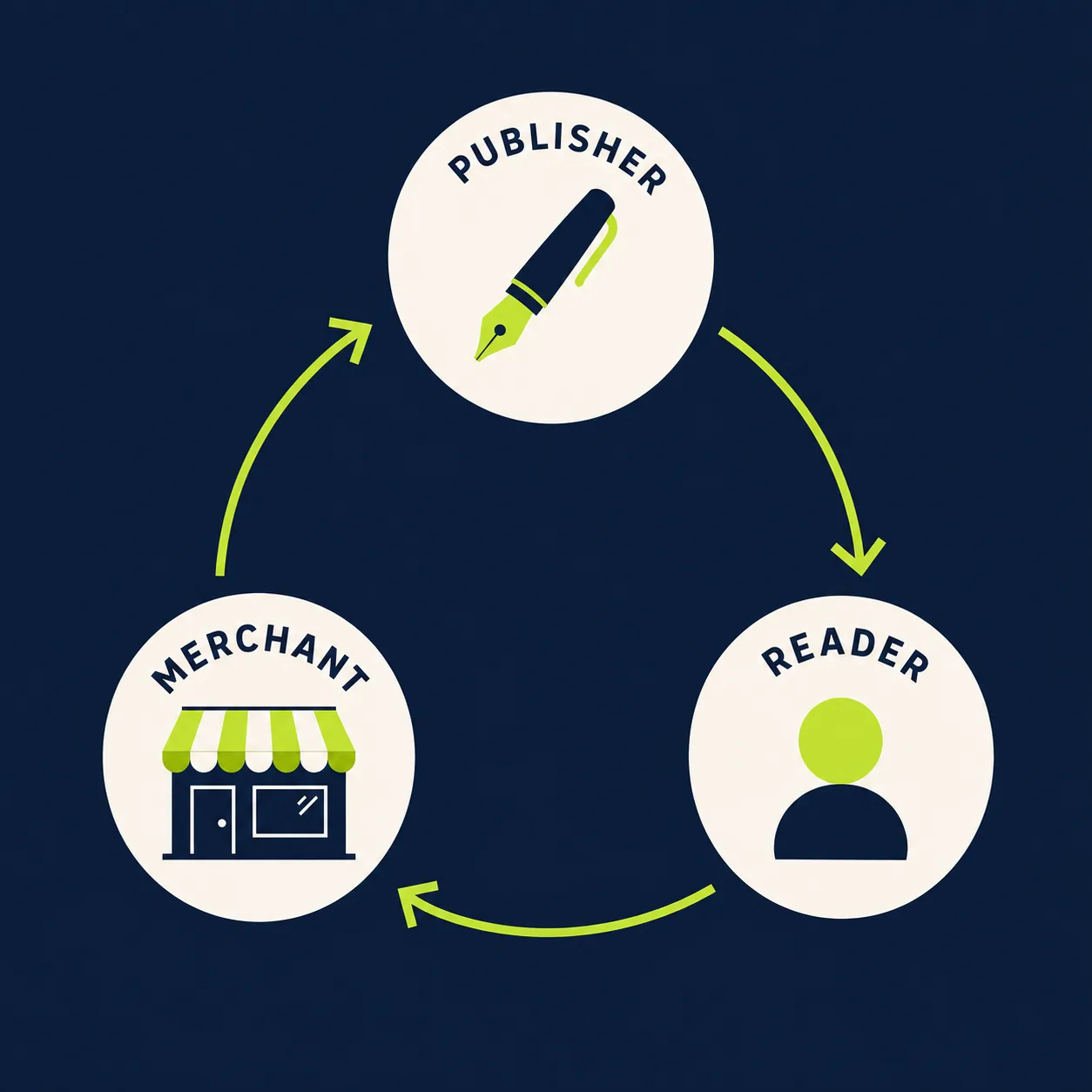
Affiliate marketing is not a mystery and it is not a money printer. It is a triangle with three sides — publisher, merchant, reader — and a single honest exchange in the middle. Understand the exchange, and the whole model becomes boringly clear. Here is how it actually works.
The Triangle: Three Sides, One Exchange
Draw a triangle and put a person on each corner. That is the whole business model, and naming the three corners is the fastest way to stop being confused by it.
- The publisher — that is you (or your site). Your job is to publish useful content that helps a reader make a decision: which product to buy, which tool to try, which option fits their situation.
- The merchant — the company that makes or sells the product. They have the thing the reader wants, and they handle the product, the store, and the shipping. They do not need you to do any of that.
- The reader — the person with a problem to solve and a decision to make. They came to your page because they wanted help, not because they wanted to be sold to.
In the middle of the triangle sits one exchange: your page helps the reader decide, the reader acts through your link, and the merchant pays you a commission for the customer you supplied. Three parties, one transaction, and every party gives something and gets something. That balance — everyone gains — is what makes the model legitimate rather than a hustle. If one corner is getting nothing, the triangle is broken.
The Franchise Frame: You Supply the Customer

The single most useful way to think about your role is the franchise frame: you are in the business of sending a qualified customer to a company that is ready to handle them. You know roughly what you will recommend and who you will recommend it to, but you do not have to build the product, run the store, or ship the box. The merchant does all of that. Your job is the front door — finding the reader, helping them decide, and sending them on their way.
This frame keeps you humble in the right way. Because you do not control the product, the checkout, or the shipping, you cannot promise the reader anything about those parts. What you can control is the quality of the reader's decision: whether your page honestly helped them choose. That is your entire product, and it is a real one. A reader who trusts your help is a reader who comes back, and a reader who comes back is a reader who eventually uses more of your links.
The frame also keeps you from pretending you run a store when you really run a helpful front door. When you know you are a front door, your page looks like help: a clear comparison, honest trade-offs, a disclosed recommendation. When you forget and pretend you are the store, your page starts looking like a sales pitch — and readers can feel the difference instantly. The franchise frame is not a metaphor to decorate the article; it is the boundary that keeps your work honest.
Where the Money Comes From
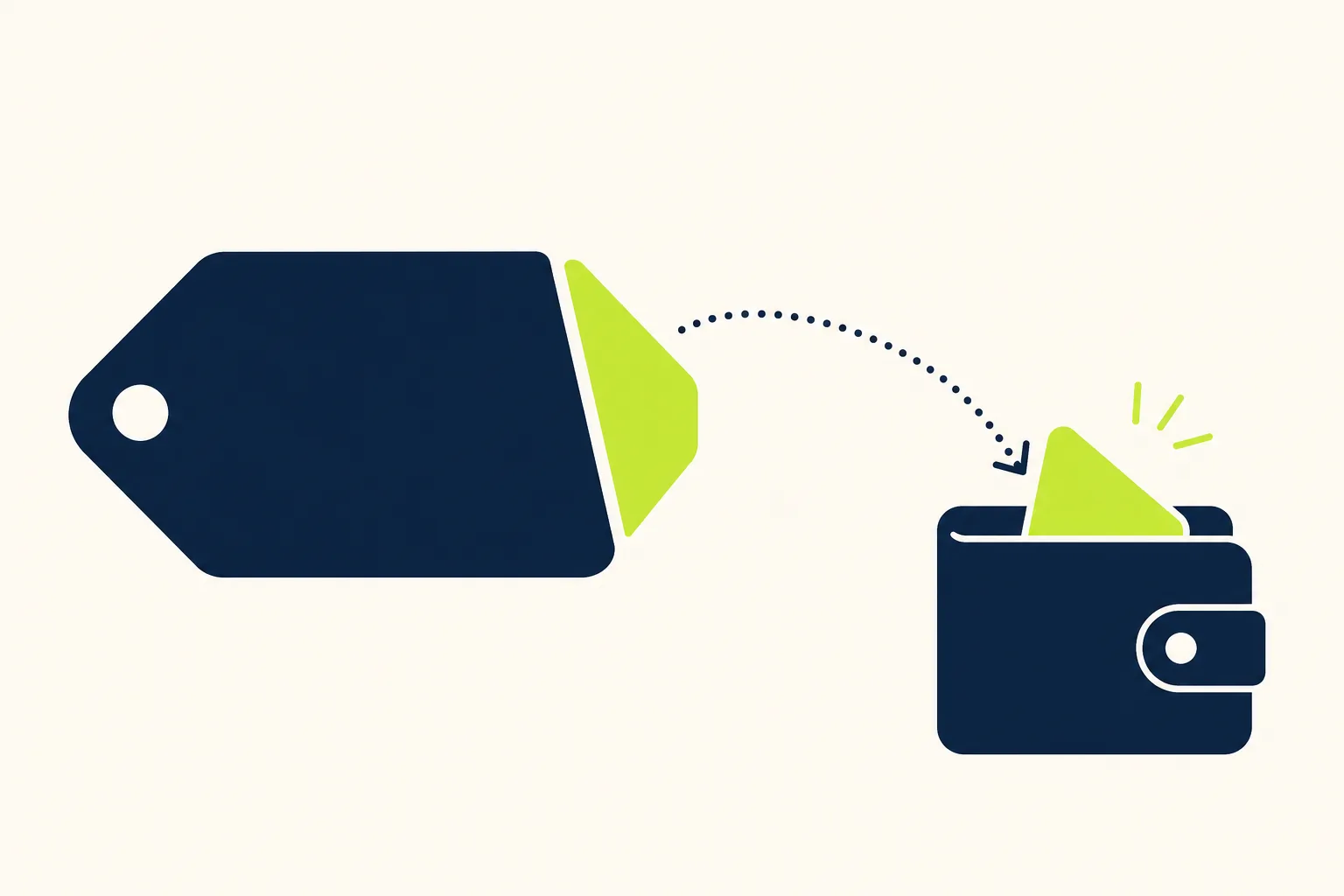
The money comes from a qualifying action, and only a qualifying action. The merchant pays you a commission because a real person took the action the program counts as a sale — most often a purchase, sometimes a free-trial signup or a form fill, depending on the program's rules. The action matters because it is the only thing the merchant actually paid for. Publishing words does not earn a commission; helping a reader who then acts is what does.
A concrete example makes it plain. Imagine you publish a helpful page comparing two budgeting apps. A reader clicks your link and signs up for the free trial of one of them. In many programs, that trial signup is the qualifying action, so the merchant may credit you with the lead — or the commission may only arrive when the reader later converts to a paid plan, depending on the terms. The honest sentence to write on the page is: “I may earn a commission if you sign up through my link — at no extra cost to you.”
Two things follow from this. First, you must know the exact qualifying action before you publish, because the merchant's rules define when you get paid and they vary wildly between programs. If you cannot find the qualifying action in the program's terms, do not guess — treat it as an open question and ask the affiliate manager. Second, the “at no extra cost to you” part is real, and it matters: the merchant pays your commission out of their own margin, not by raising the reader's price. The reader pays the same either way; your referral just changes who gets a cut of the sale.
Why Merchants Pay at All
A skeptical reader asks the obvious question: why would a merchant give away a cut of every sale? The honest answer is that they are not giving anything away — they are buying customers they would not otherwise have reached.
A merchant has two ways to find customers. They can spend their own money on advertising, where they bid against every other advertiser for the same audience and the cost of a customer gets pushed right up to the edge of what the offer is worth. Or they can pay only for results: a commission that lands only when a real customer actually takes a qualifying action. Affiliate marketing is the second way. The merchant pays nothing for your page, nothing for your traffic, and nothing for the readers who do not buy. They pay only for the customers you actually deliver. From the merchant's side, that is not a cost to minimize; it is a better deal than advertising, because the risk is on the publisher, not on them.
This is why programs are findable at all. A merchant wants you to find their program, because you are a distribution channel — a way to reach audiences they could not reach alone. The merchant leaves doors open (a footer link, a partners page, a network listing) because a program nobody can find makes the merchant no money. Affiliate programs are not hidden; they are marketed to you, the publisher, the same way you will market the merchant to your readers. Both of you are in the same business: reaching people with something useful.
There is one more reason merchants pay, and it is the reason the model survives hype: quality. A merchant's own ads can reach anyone, but a helpful publisher's page reaches a reader who is already deciding and already inclined to trust the recommendation. The merchant is not just buying a click; they are buying a qualified, in-the-moment customer who arrived through a page that did the explaining for them. That is worth a commission. (The mechanics of finding these programs — the footer check, the plain search, the competitor-links move — are a separate skill, and the discipline of feeding a program's real terms to an AI agent so it cannot invent them is the source-packet method.)
What This Means for Your First Link
Once the triangle is clear, two practical rules fall out for the first link you will ever publish:
- Write the three-sentence contract first. Before you add a single link, write: “A reader might use my link because my page helped them decide more clearly,” “the merchant might pay me a commission because my page brought them a customer they would not otherwise have reached,” and “in this arrangement, I supply the customer; the company handles the product, the store, and the shipping.” If all three are true, the link earns its place. If any one is hollow, the page is not ready.
- Run the “remove the link” test. Imagine the program cancels your account tomorrow and every affiliate link on your page becomes a plain outbound link. Would the page still be worth reading? Would the reader still thank you? If yes, you have a real page with an affiliate link attached — the shape that compounds. If no, you have an affiliate link with a page wrapped around it — the shape that collapses. Build the first kind.
And when you do add the link, disclose it plainly and early — immediately before or beside the first recommendation, never only in a footer. A reader who knows you may earn a commission and trusts you anyway is the reader who comes back. The disclosure is not a cost; it is the admission price of trust, and it is the same habit that keeps a one-person site alive. (The exact placement rule is in our guide to disclosure placement.)
The Next Step
Your next step is the three-sentence contract — and it takes ten minutes. Open a blank note and write the reader sentence, the merchant sentence, and the franchise sentence for the first page you want to build. If the merchant sentence is the hard one — if you cannot say what the merchant gets out of the arrangement — you have not yet found the offer worth recommending. That is not a failure; it is the signal that the page needs more work before the link goes on.
Want the full picture of what that page should contain — the research, the structure, the disclosure — built in the right order? The Affiliate Agent Kit walks you through the triangle from the reader's side, and the Learn hub has the plain-language pieces, including what an affiliate marketer actually does all day and how to tell a legit program from a trap. Or just write the three sentences now — the triangle is simple, and the work of filling your corner is yours.
One honest CTA: write the three-sentence contract for one page today. Understand the exchange, and the model stops being a mystery — it becomes a front door you are learning to run.
Results vary. Affiliate marketing involves effort, learning, traffic acquisition, and compliance. Earnings are never guaranteed.
Results vary. Affiliate marketing involves effort, learning, traffic acquisition, and compliance. Earnings are never guaranteed.