Is Affiliate Marketing Legit — or a Scam? The Calm, Honest Answer
Leave with: a clear answer on whether the model is legit, and a two-sentence test that separates it from scams.
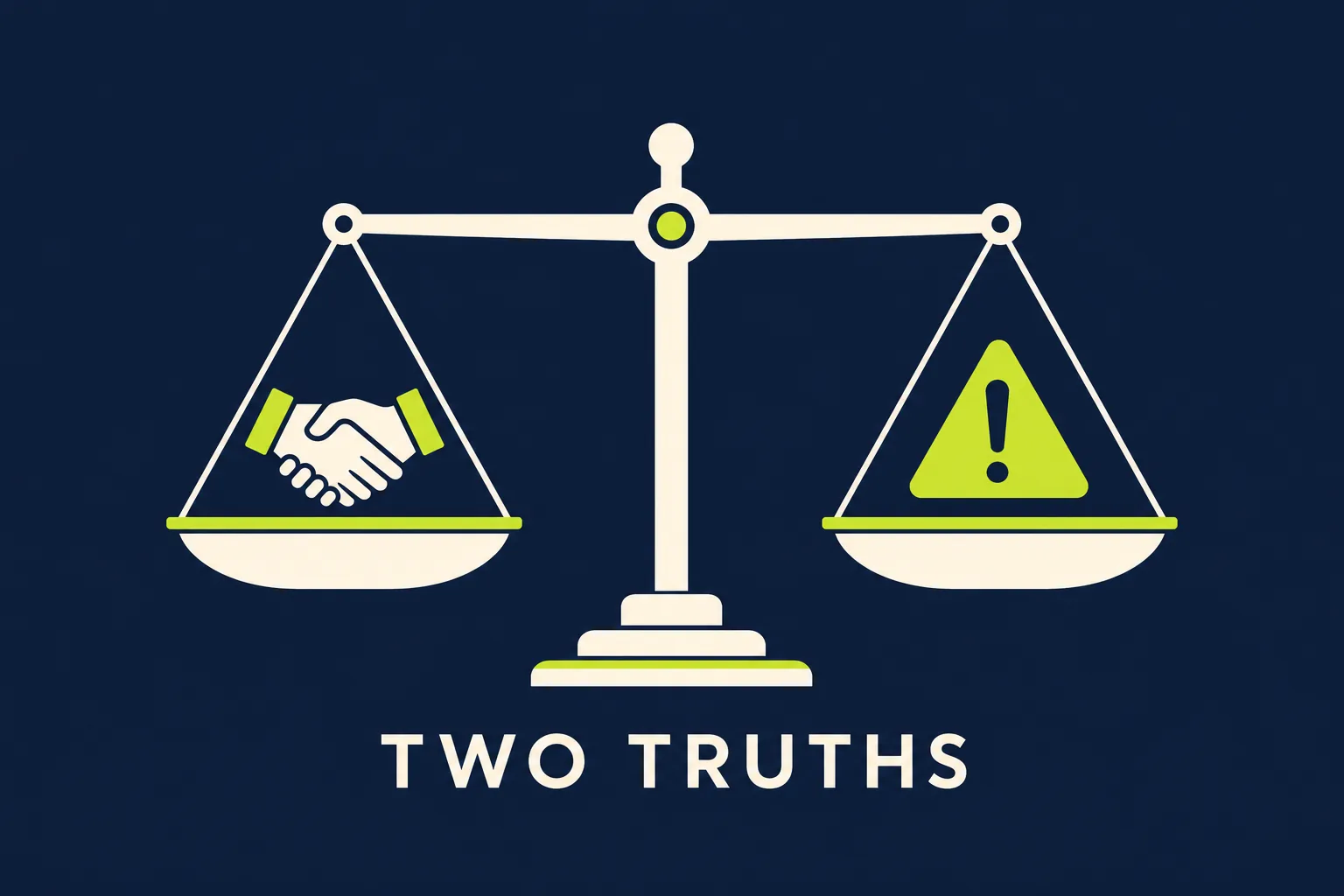
Affiliate marketing is a legitimate business model, and it is also the exact phrase wrapped around some of the loudest scams on the internet. Both statements are true at once, and holding both is the whole skill. Here is the calm, honest answer to the question every beginner is afraid to ask out loud.
The Two Truths at Once
The question “is affiliate marketing legit?” is really two questions wearing one coat. The first is about the model: is it a real, legal way for a person to earn a referral commission for sending a merchant a customer? The answer is yes — it has been for decades, and it is the same economics as a restaurant paying a friend who brings in a table of guests. The second question is about the industry around it: is every person selling “affiliate marketing” honest? The answer is no, and it never was.
The reason both can be true is simple. The model is a referral fee paid for a real action. The scams are people selling the dream of the model — the promise that it is easy, guaranteed, and passive — rather than the work. A legitimate business model does not stop existing because some people misuse its name, and a scam does not become legitimate because it uses a respectable-sounding label. The job is to tell the difference, and the difference is learnable.
Why the Model Itself Is Legitimate
Affiliate marketing is referral-based compensation. A merchant pays you a commission when a reader takes a qualifying action through your link — usually a purchase, sometimes a free-trial signup or a form fill, depending on the program's rules. The merchant pays because you supplied a customer they would not otherwise have reached. That is not a trick; it is the same deal a business strikes with any sales channel.
The cleanest way to see it is the franchise frame: you supply the customer, and the merchant handles the product, the store, and the shipping. You are not running a store. You are running a helpful front door — a page that genuinely helps a reader decide, then points them to a company ready to serve them. The merchant is happy because they got a qualified customer; you are happy because you got paid for the help; the reader is happy because they made a better decision. All three sides gain, and that is what makes the model durable rather than fragile.
What it is not is a passive paycheck, a guaranteed cut, or a substitute for useful pages. A commission only happens when three things line up: a real person finds your page useful, trusts it enough to click, and then takes the action the program counts as a sale. None of those three are guaranteed by joining a program. The merchant's rules also govern everything — which actions count, what is excluded, when you get paid — and those rules can change. Legit means you understand the exchange on both sides; it does not mean a check arrives for publishing words. (This is the honest framing the Affiliate Agent Kit's guide opens with: the deal is small, calm, and real — not a promise of easy money.)
Where the Scams Actually Live

If the model is legitimate, why does “affiliate marketing” so often smell like a scam? Because the scams do not live in the model — they live in the sales pitch around it. They cluster in four recognizable shapes:
- Gurus selling the dream, not the work. The pattern is a course or a “community” priced in the hundreds or thousands, sold on screenshots of income and a promise of quick results. The product being sold is not affiliate marketing; it is the fantasy that you can skip the slow, boring work of building useful pages. A legitimate business sells you a method you can apply; a guru sells you relief from the effort.
- Fake screenshots and fabricated income. Dashboards showing “$12,847 this week” with no way to verify them. Real affiliate income exists, but a screenshot is not evidence — it can be edited, borrowed, or staged. The absence of a verifiable, reproducible method behind the number is the tell.
- Pay-to-play “programs.” The most dangerous shape. A legitimate affiliate program pays you for referrals — you never pay to join. When a “program” charges an entry fee, a monthly fee, or requires you to buy inventory to “qualify,” the money flows the wrong direction: toward the person selling the opportunity, not toward the person who supplied the customer. That is not affiliate marketing; that is a subscription to a dream.
- Manufactured urgency and scarcity. “Only 5 spots left,” “closes tonight,” “act now or miss the window.” Real opportunities do not need a countdown clock to be worth taking. Urgency that is not real is manipulation, and manipulation is the opposite of the honest exchange that makes the model legitimate.
The shared thread: every scam points money toward the seller of the opportunity, while the legitimate model points money to the person who supplied a real customer. Follow the direction of the money and the fog clears.
How to Tell a Legit Program From a Trap

You do not need to be a fraud expert to sort the honest from the trap. You need three checks, and they are all learnable:
- Does the money flow the right way? A real program pays you for referrals. You should never pay to join, never pay a monthly fee, never buy inventory to qualify. If the price of admission is anything but your time and a live page, walk away.
- Can you name the exchange on both sides? Write two sentences. “A reader might use my link because my page helped them decide more clearly,” and “the merchant might pay me because my page brought them a customer they would not otherwise have reached.” If both sentences are true, you have a real arrangement. If only the second one works — if the page exists just to carry the link — you have a transaction pretending to be help, which is the shape of a problem.
- Can you find the program's own terms? A legit program is findable (a footer link, a partners page, a network listing) and its official page states its rules: qualifying actions, exclusions, payout timing, disclosure requirements. Read those terms once and write down the exact qualifying action. If the rules are a mystery or the program only exists inside a sales funnel, that is your answer. The honest source-packet method is built for exactly this: feed the program's real terms to an AI agent and make it quote them, so you are not guessing.
The deeper test is the one that keeps you safe long after you join: imagine the program cancels your account tomorrow and every affiliate link on your site becomes a plain outbound link. Would the page still be worth reading? Would the reader still thank you? If yes, you built a real page with an affiliate link attached. If no, you built an affiliate link with a page wrapped around it — and that is the fragile shape. Real pages compound; wrapped links collapse.
The Standard Disclaimer, Stated Plainly
Because this article talks about income and results, the honest disclaimer belongs here, in the open:
Results vary. Affiliate marketing involves effort, learning, traffic acquisition, and compliance. Earnings are never guaranteed.
Read that sentence twice, because it is the whole anti-scam in one line. The model is legit, but “legit” does not mean “easy” or “guaranteed.” Legit means the exchange is real — you do real work, you follow real rules, and you may earn a real commission when a real person benefits from your help. Any course, program, or guru that promises to remove the effort, the learning, or the uncertainty is selling you the thing that makes the model a scam.
The Next Step
Your next step is a small, quiet one that separates you from the hype in an hour: write the two-sentence exchange for a page you want to build. “A reader might use my link because my page helped them …” and “the merchant might pay me because …” If both sentences come out true, you have found a legitimate corner to build in, and you can stop worrying about whether the whole industry is a scam. If either sentence is hollow, keep working until it is honest — that is the work, and it is the part no guru can skip for you.
Want the structure for building that honest page — including the trust pages and disclosure placement that keep it above the scam line? The Affiliate Agent Kit walks you through it, and the Learn hub has the plain-language guides on how the model actually works and where disclosures must sit. Or just start with the two sentences above — the calm honest answer is that the model is legitimate, and the work of proving it is yours.
One honest CTA: write the two sentences for one page today, even if the page does not exist yet. Legit is not a label you buy; it is a shape you build.
Results vary. Affiliate marketing involves effort, learning, traffic acquisition, and compliance. Earnings are never guaranteed.
Results vary. Affiliate marketing involves effort, learning, traffic acquisition, and compliance. Earnings are never guaranteed.